Strawberry Fairy Clipart: A Guide to Whimsical Digital Illustrations
In the vast landscape of digital design resources, few motifs capture the imagination quite like the fusion of nature's sweetness with ethereal fantasy. Strawberry Fairy Clipart represents a specific niche where vibrant botanical elements meet delicate, magical characters. This collection is not merely a set of images; it is a toolkit for creators looking to infuse their projects with a sense of wonder, playfulness, and organic charm. From high-resolution PNG files designed at 300 DPI to intricate details that showcase the interplay between fruit and flight, these illustrations serve as foundational assets for a wide array of creative endeavors.
The appeal of this specific imagery lies in its versatility. It bridges the gap between childish whimsy and sophisticated botanical art, making it suitable for everything from kindergarten classroom decorations to elegant wedding invitations. Understanding how to leverage these assets effectively can significantly elevate the visual storytelling of any project. By examining the characteristics, applications, and technical considerations of Strawberry Fairy Clipart, designers and hobbyists alike can unlock new possibilities in their work.
The Artistic Fusion of Botanical and Fantasy Elements
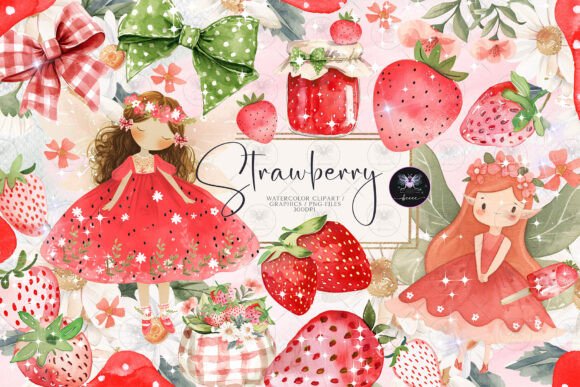
At the core of this clipart style is the seamless integration of two distinct visual languages: the realistic or stylized depiction of strawberries and the imaginative rendering of fairies. The strawberry, often associated with summer, sweetness, and the peak of the growing season, provides a rich color palette dominated by deep reds, lush greens, and creamy whites. When paired with the translucent wings and flowing garments typical of fairy lore, the result is an image that feels both grounded in nature and lifted into the realm of magic.
High-quality Strawberry Fairy Clipart typically features detailed textures. You might observe the tiny seeds on the surface of the fruit, the serrated edges of the leaves, and the iridescent sheen on fairy wings. These details are crucial for maintaining visual interest, especially when the images are used in large formats such as banners or posters. The composition often places the fairy in an active relationship with the fruit—perhaps perched atop a giant berry, holding a leaf as an umbrella, or weaving through vines of strawberry plants. This dynamic interaction creates a narrative within a single static image, inviting the viewer to imagine the story behind the scene.
The color theory employed in these illustrations is equally important. The contrast between the warm, saturated red of the strawberry and the cool, pastel tones often found in fairy attire creates a balanced and visually appealing aesthetic. This balance allows the images to stand out against various background colors without clashing, a key consideration for designers working on complex layouts. Whether the style leans towards watercolor softness or crisp vector lines, the underlying principle remains the same: to evoke a feeling of enchantment rooted in the natural world.
Technical Specifications for Professional Use
For professionals and serious hobbyists, the technical quality of digital assets is paramount. The standard for print-ready materials requires a resolution of at least 300 dots per inch (DPI). High-resolution Strawberry Fairy Clipart meets this benchmark, ensuring that when printed, the images remain sharp and free from pixelation. This is particularly important for physical products like greeting cards, scrapbook pages, or fabric transfers where fine details must be preserved.
Furthermore, the file format plays a critical role in usability. Most premium collections offer these illustrations in PNG format with transparent backgrounds. This transparency is essential for layering. Designers can place a fairy character over a textured paper background, a gradient sky, or within a complex layout without the distraction of a white box surrounding the subject. The ability to isolate the subject allows for greater creative freedom, enabling users to resize, rotate, and reposition elements without compromising the integrity of the final design.
When considering the scalability of these images, it is worth noting that while raster images (like PNGs) have a fixed resolution, high-DPI files allow for significant enlargement before quality degradation occurs. For instance, a 300 DPI image sized at 8x10 inches can be printed at that size with excellent clarity. However, stretching it beyond its native dimensions will eventually lead to blurriness. Therefore, understanding the pixel dimensions provided in the product description is vital for planning large-scale projects. For those requiring infinite scalability, some creators also offer vector versions, though the specific "22 png-300dpi" collection mentioned focuses on high-fidelity raster graphics optimized for immediate use in print and digital media.
Diverse Applications Across Creative Industries
The utility of Strawberry Fairy Clipart extends far beyond simple decoration. Its thematic resonance makes it applicable across several industries and creative domains. In the realm of event planning, these images are indispensable for creating cohesive branding for themed parties. A baby shower celebrating a girl, a summer birthday bash, or a garden-themed wedding can all benefit from the gentle, magical aesthetic these illustrations provide. Invitations, table numbers, favor tags, and cake toppers can all be customized using these assets, ensuring a unified visual identity for the event.
Educators also find immense value in this type of imagery. In early childhood education, visual aids are crucial for engagement. Teachers can use Strawberry Fairy Clipart to create worksheets about seasons, healthy eating (focusing on fruits), or even reading comprehension exercises involving fantasy stories. The bright colors and friendly characters help maintain student attention, while the educational content remains clear and accessible. Additionally, these images can be used to decorate classroom environments, transforming a standard room into an immersive learning space that sparks curiosity and creativity.
For small business owners and DIY crafters, the potential for monetization and personal expression is significant. Artists selling on platforms like Etsy can incorporate these clips into digital planners, printable wall art, or sublimation designs for t-shirts and mugs. The "nature-inspired charm" mentioned in the source material translates well into products that appeal to consumers seeking unique, handcrafted aesthetics. Scrapbookers, in particular, rely on such high-quality cutouts to tell personal stories, using the fairy motifs to symbolize joy, growth, or special moments captured in their albums.
Specific Use Cases in Detail
- Digital Planners: Users can insert these images as stickers or decorative headers in apps like GoodNotes or Notability, adding a touch of personality to their productivity tools.
- Social Media Graphics: Content creators can overlay these illustrations on photos or text posts to create eye-catching thumbnails and promotional materials for blogs or Instagram accounts focused on lifestyle, gardening, or parenting.
- Merchandise Design: The clean lines and transparent backgrounds make these assets ideal for heat transfer vinyl (HTV) cutting machines, allowing crafters to produce custom apparel and home decor items.
- Book Illustrations: Self-published authors writing children's books can license these images to illustrate scenes, saving time and cost compared to commissioning original artwork for every page.
Navigating Licensing and Ethical Usage
As with any digital asset, understanding the terms of use is essential for responsible creation. While Strawberry Fairy Clipart offers immense creative freedom, it is bound by licensing agreements that dictate how the images can be distributed and sold. Typically, these licenses distinguish between personal use and commercial use. Personal use allows individuals to create items for themselves, their families, or as gifts, whereas commercial use permits the incorporation of the images into products intended for sale.
However, even with a commercial license, there are often restrictions. For example, most licenses prohibit reselling the raw clipart files as-is. Instead, the user must add significant value by incorporating the images into a larger design, such as a greeting card or a patterned fabric. This ensures that the artist's intellectual property is respected and that the market is not flooded with unmodified copies of the original work. Creators should always review the specific End User License Agreement (EULA) provided with their download to ensure compliance.
Furthermore, ethical usage involves giving credit where appropriate. Some licenses require attribution, meaning the designer's name or website must be mentioned when the work is displayed publicly. Adhering to these guidelines fosters a healthy creative community and supports the artists who dedicate time and skill to producing these enchanting illustrations. By respecting these boundaries, users contribute to the sustainability of the digital art ecosystem.
Enhancing Workflow with Layered Design Strategies
To maximize the impact of Strawberry Fairy Clipart, designers should employ strategic layering techniques. Because these images often come as individual elements—a fairy here, a strawberry there, a vine elsewhere—the real magic happens when they are combined thoughtfully. Using software like Adobe Photoshop, Canva, or Procreate, users can build depth by placing background elements first, followed by mid-ground subjects, and finally foreground accents.
For instance, one might start with a soft, blurred background of a garden, then place a large strawberry cluster in the center, and finally position the fairy interacting with the fruit. Adding shadows beneath the objects can ground them in the scene, preventing the "floating" look that sometimes plagues digital collages. Adjusting opacity and blending modes can further integrate the clipart into the overall composition, making the transition between the illustration and the background seamless.
Color grading is another powerful tool. If the background image has a different color temperature than the clipart, applying a subtle filter or adjustment layer can harmonize the tones. This attention to detail transforms a simple assembly of images into a cohesive piece of art. Whether the goal is a rustic, vintage feel or a modern, vibrant look, the flexibility of Strawberry Fairy Clipart allows for endless experimentation.
The Enduring Appeal of Nature-Inspired Fantasy
Ultimately, the popularity of Strawberry Fairy Clipart speaks to a broader cultural desire for connection with nature and a longing for the magical. In an increasingly digital and fast-paced world, these images offer a moment of pause and delight. They remind us of the beauty found in simple things—a ripe fruit, a fluttering wing, the warmth of the sun. For creators, they provide a reliable resource to tap into this sentiment, offering a way to communicate joy, innocence, and wonder through visual language.
Whether you are a professional graphic designer crafting a brand identity, a teacher preparing a lesson plan, or a parent decorating a nursery, these illustrations serve as a versatile bridge between reality and imagination. By choosing high-quality, well-designed assets, you ensure that your projects not only look beautiful but also resonate emotionally with your audience. As you explore the possibilities of this enchanting collection, remember that the true magic lies not just in the images themselves, but in the stories you tell and the worlds you create with them.